
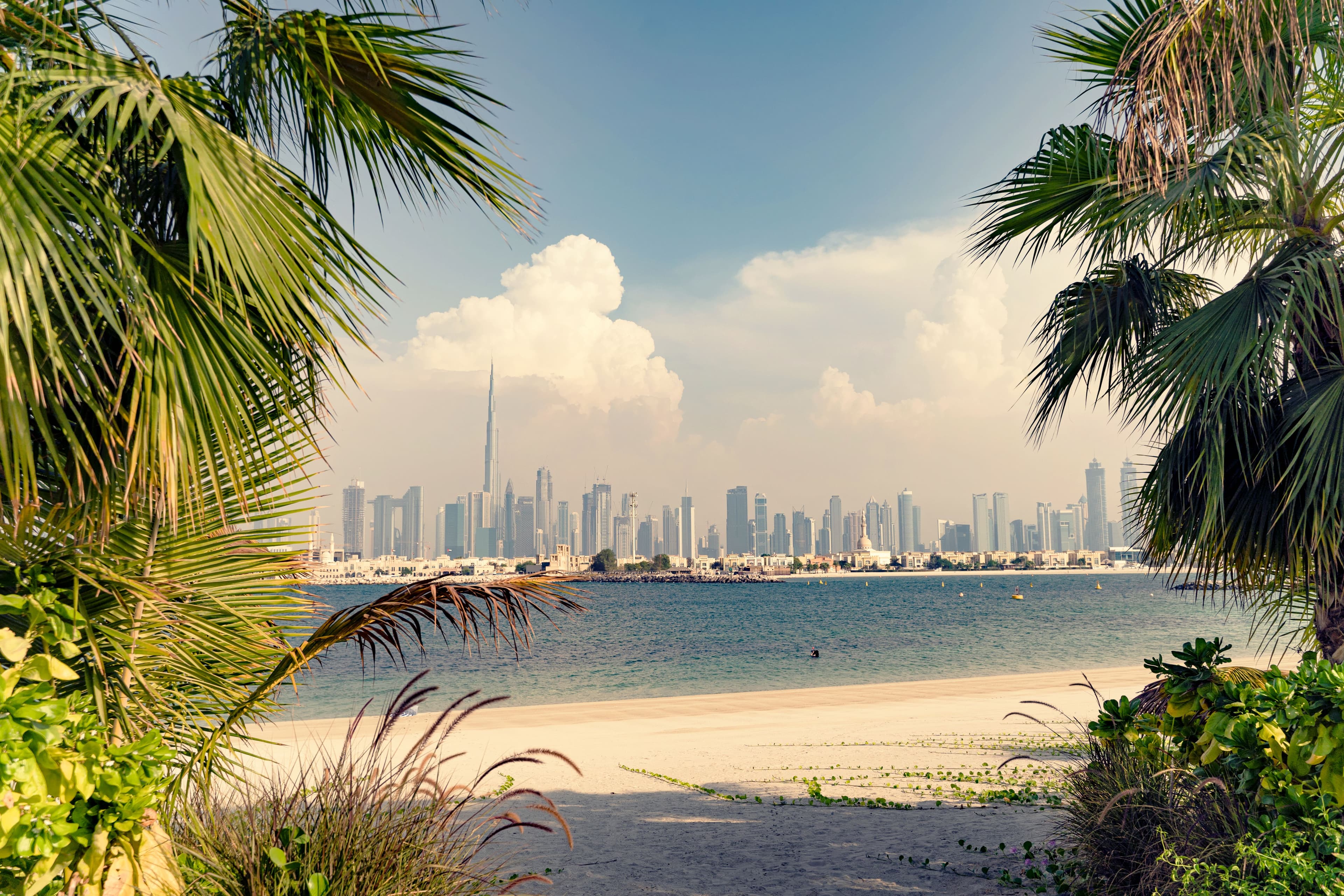
- Dubai offers higher average rental yields, with gross residential yields around 6.6% in mid-2026.
- Marbella offers a more supply-constrained luxury market, particularly in established prime locations.
- Dubai suits yield-focused and off-plan investors, while Marbella can be stronger for buyers combining investment with lifestyle and personal use.
Marbella vs Dubai: Where Should You Buy Property in 2026?
Marbella and Dubai are two of the most internationally recognised luxury property markets, and increasingly, buyers are considering both.
Both offer strong international demand, high-end new developments and attractive lifestyles. But from an investment perspective, they are very different markets.
Dubai currently offers higher rental yields and an enormous off-plan market, while Marbella combines limited prime supply with an established European lifestyle destination and long-term demand for quality homes.
So, if you have capital to invest in 2026, where does it make more sense to buy?
Two luxury markets, two different strategies
The first thing to understand is that Marbella and Dubai should not necessarily be viewed as direct substitutes.
Dubai is a large, rapidly developing global city where new residential supply is constantly entering the market. Off-plan property is a major part of the buying landscape: in the first half of 2026, 71.3% of residential sales in Dubai were off-plan.
Marbella is considerably smaller and more supply-constrained, particularly in established prime areas. Location, land availability and the quality of individual properties therefore play an especially important role.
For investors, this creates two different propositions: Dubai is heavily driven by development, scale and yield, while Marbella is more focused on scarcity, location and lifestyle-led demand.
Property prices: what does your budget buy?
Comparing average prices between the two markets can be misleading.
In Marbella, prices vary dramatically between neighbourhoods. A property in Marbella town, Nueva Andalucía, Sierra Blanca or the Golden Mile can sit within completely different price brackets.
One Q3 2026 market estimate places the Marbella-wide average at approximately €5,720 per m², while noting that the municipality-wide figure hides substantial differences between individual areas and urbanisations.
Dubai is similarly fragmented. Prime waterfront locations such as Palm Jumeirah and established central districts can command very different prices from emerging communities further from the city centre.
This means the better question is not simply “Which city is cheaper?”
It is:
What can the same budget buy in the right location in each market, and what is the long-term demand for that particular property?
Rental returns: Dubai has the advantage
For investors primarily focused on rental income, Dubai currently has a clear advantage.
Average gross residential rental yields in Dubai stood at approximately 6.6% in June 2026, with apartments averaging around 6.9%. Townhouses and villas produced lower average yields of approximately 5.1% and 4.5% respectively.
Marbella can also generate attractive rental income, particularly for well-located properties, but returns vary substantially according to location, property type, seasonality and the permitted rental use of the property.
Investors should therefore avoid comparing headline yields alone. Service charges, community fees, management, maintenance, financing and taxation all affect the actual net return.
For pure rental yield, Dubai is generally the stronger proposition. For a combination of personal use, lifestyle and long-term ownership, Marbella offers a different type of value.
Buying costs and taxation
Transaction costs are another important difference.
For resale residential property in Andalucía, the general Property Transfer Tax (ITP) rate is currently 7%. New-build residential property is generally subject to 10% VAT, with the public deed also generally subject to 1.2% AJD stamp duty.
Buyers should also budget for the other professional and transactional expenses associated with a Spanish property purchase.
The tax position in Dubai is structured differently, which can make the market particularly attractive to internationally mobile investors.
However, the tax implications of owning property abroad depend not only on where the property is located, but also on the buyer's personal circumstances and tax residency. Professional tax advice should therefore form part of any serious cross-border investment decision.
Off-plan opportunities
This is one of the biggest differences between the two markets.
Dubai has an enormous off-plan sector. More than seven out of ten residential transactions during the first half of 2026 involved off-plan property.
Buyers can choose from a large pipeline of developments, often with staged developer payment plans and a wide range of entry points.
This creates opportunity, but it also makes developer selection, location and future supply extremely important. In areas with significant construction pipelines, investors need to consider how much competing inventory may be delivered before they intend to sell or rent their property.
The Costa del Sol also has a strong new-development market, particularly across Marbella, Benahavís, Estepona, Mijas and Sotogrande.
However, the proposition is different. In established prime locations, suitable development land is naturally limited, meaning that genuinely exceptional new projects can be difficult to replicate.
Lifestyle matters more than investors sometimes think
Not every property investment is purely financial.
Many Marbella buyers want an asset they can also use themselves: a second home for several months of the year, a future permanent residence or a property that can remain within the family.
Marbella offers Mediterranean beaches, golf, international schools, restaurants and established residential communities, with the wider Costa del Sol providing a broad choice of locations and lifestyles.
Dubai offers something completely different: a highly connected international city, modern infrastructure, extensive hospitality and entertainment, year-round services and a constantly evolving residential landscape.
For someone choosing a home as well as an investment, this distinction can be more important than a small difference in projected return.
Which market is better for investment?
There is no universal winner.
Dubai may be more suitable if your priority is:
- Higher potential rental yield
- Access to a very large off-plan market
- Flexible developer payment structures
- A more investment-led purchase
- Exposure to a rapidly expanding global city
Marbella may be more suitable if your priority is:
- A European property with strong personal-use value
- Established prime locations with constrained supply
- Mediterranean lifestyle
- Long-term ownership
- Combining lifestyle and investment considerations
For some international buyers, the answer may even be both. The two markets can serve different purposes within a property portfolio rather than competing for exactly the same investment objective.
The property matters more than the market
Choosing between Marbella and Dubai is only the first decision.
A good market does not automatically make every property within it a good investment.
In Dubai, investors should pay particular attention to the developer, payment structure, location, future supply and realistic rental demand. Buyers became increasingly selective on factors including developer reputation, location, quality and long-term potential during the first half of 2026.
On the Costa del Sol, the individual micro-location can be equally important. Orientation, views, walking distance to amenities, community quality, surrounding development and scarcity can significantly affect both desirability and resale potential.
Ultimately, the right property in the right location is more important than choosing a market based on headline statistics alone.
Marbella or Dubai?
For investors seeking income and a highly active off-plan market, Dubai currently presents a compelling proposition.
For buyers looking to combine investment with lifestyle, personal use and ownership in an established European luxury destination, Marbella remains exceptionally attractive.
The best choice depends on what you want the property to achieve.
At Smartmove, we work with international buyers looking for property opportunities in both Marbella and Dubai. Our team can help you compare the two markets based on your budget, objectives and preferred investment strategy, and identify opportunities that make sense beyond the headline numbers.
Considering Marbella, Dubai or both? Contact our team to discuss which market and property strategy best fits your goals.