La Quinta and Real de La Quinta: An Investment Report
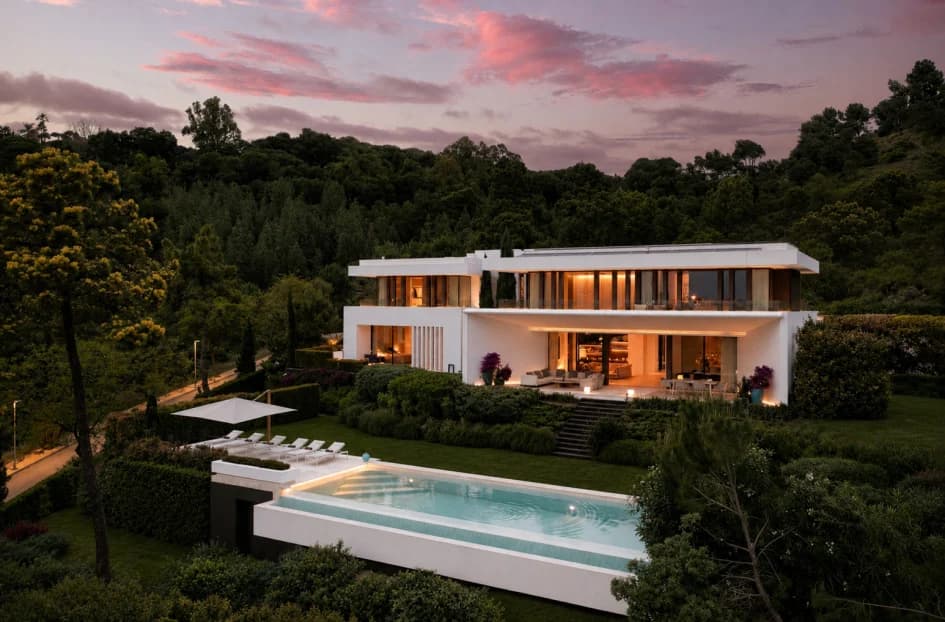
In Real de La Quinta, a villa phase that originally launched at 4.295 million euros now sells from 6.395 million. That single fact tells you more about this hillside than any forecast, because it is not a projection — it is what the developer has actually charged as phases have sold through.
La Quinta is one of the more instructive investment cases on the Costa del Sol, precisely because it contains two different markets stacked on the same slope: an established urbanisation with thirty-five years of history and comparable stock, and directly above it a 200-hectare resort still under construction. This report looks at both, at what the numbers actually show, and at what a buyer should verify before committing.
Two Markets, One Hillside
La Quinta is the mature market. Built from 1989 around a 27-hole Manuel Piñero course, with the five-star Westin at its centre, it offers villas, townhouses and low-rise apartments with three decades of established landscaping and, crucially, a deep pool of comparable transactions. Around 155 properties are typically listed at any one time, running from apartments near 390,000 euros to villas approaching fifteen million.
Real de La Quinta is the development market. Two hundred hectares above the original urbanisation, gated, bordering a UNESCO Biosphere Reserve, being delivered in phases over a period of years. Apartments start around 1.3 million, villas from 6.395 million, and serviced plots from 1.3 million.
These are different risk profiles with different return drivers, and conflating them is the most common error made in discussing this area. The first offers liquidity and evidence. The second offers phase pricing and a development premium.
Why the History Matters to an Investor
La Quinta has been developed by the same family business for more than thirty-five years. The golf course opened in 1989, designed by Piñero — a 1985 Ryder Cup winner — with Antonio García Garrido. The academy followed in 1990 as one of the first serious teaching facilities on this coast, and it is still headed by Piñero. The Westin gave the urbanisation a five-star anchor.
For an investor, single-developer continuity over three and a half decades is not sentiment. It means infrastructure that was planned rather than retrofitted, a masterplan that has been followed, and a track record of delivery that can actually be inspected. Most of this coast was built by developers who arrived, built and left, and the difference shows in the roads, the drainage and the landscaping thirty years on.
What Is Actually Being Built
Real de La Quinta's masterplan is unusually substantial, and a buyer should understand what is delivered versus what is promised.
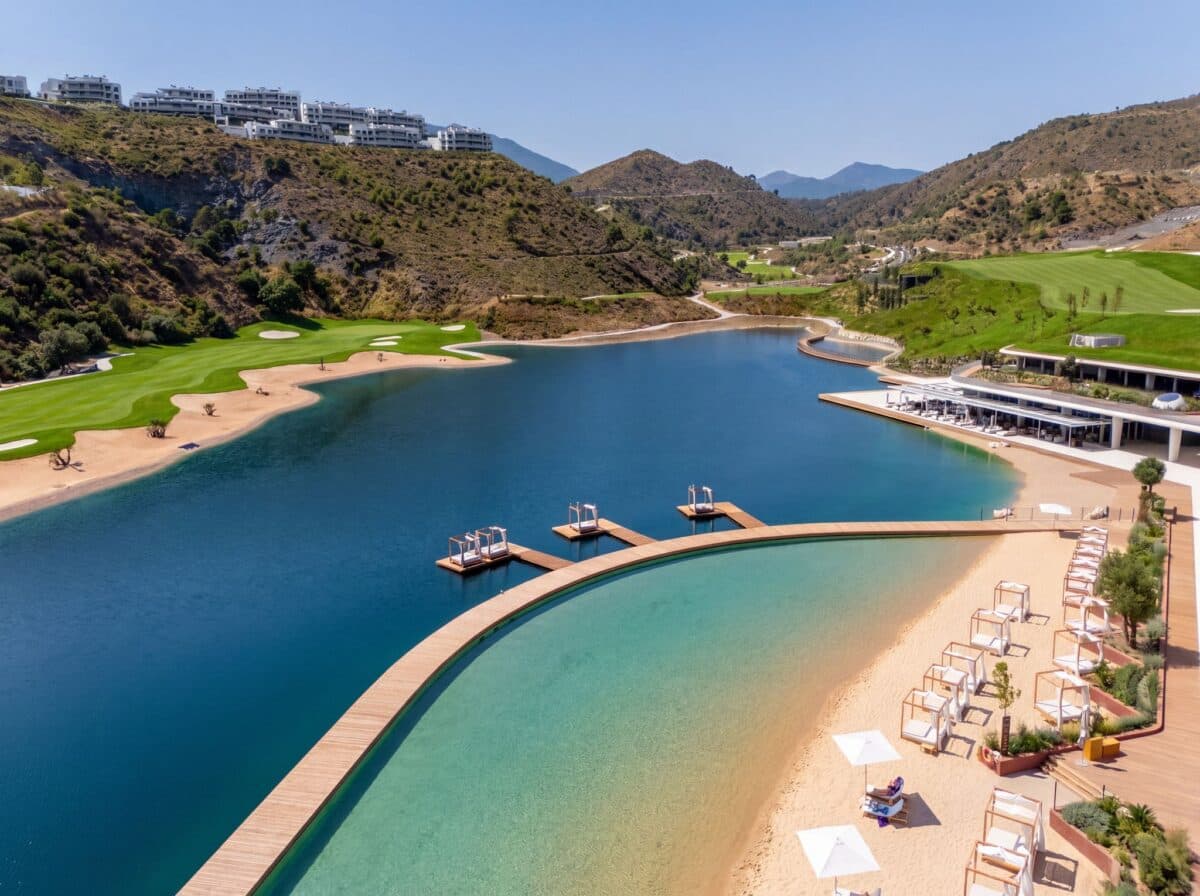
Delivered or well advanced: the lake, covering around 36,000 square metres and more than four hundred metres at its longest, with an artificial beach and enclosed swimming area. El Lago Club, the residents' club, with wellness centre, spa, sauna, twenty-five metre heated pool, restaurants and sports facilities. An executive golf course by Piñero encircling the lake, with academy and practice areas. Residential phases including Olivos, Quercus, Romero, Mimosas, Enebros and Vista Lago Residences.
Still to come: the Angsana Real de La Quinta, the Banyan Tree Group's first venture in Spain, positioned on a hilltop within the resort with hotel, branded residences and commercial space, scheduled to open in 2026. An equestrian centre, and a tennis and padel club.
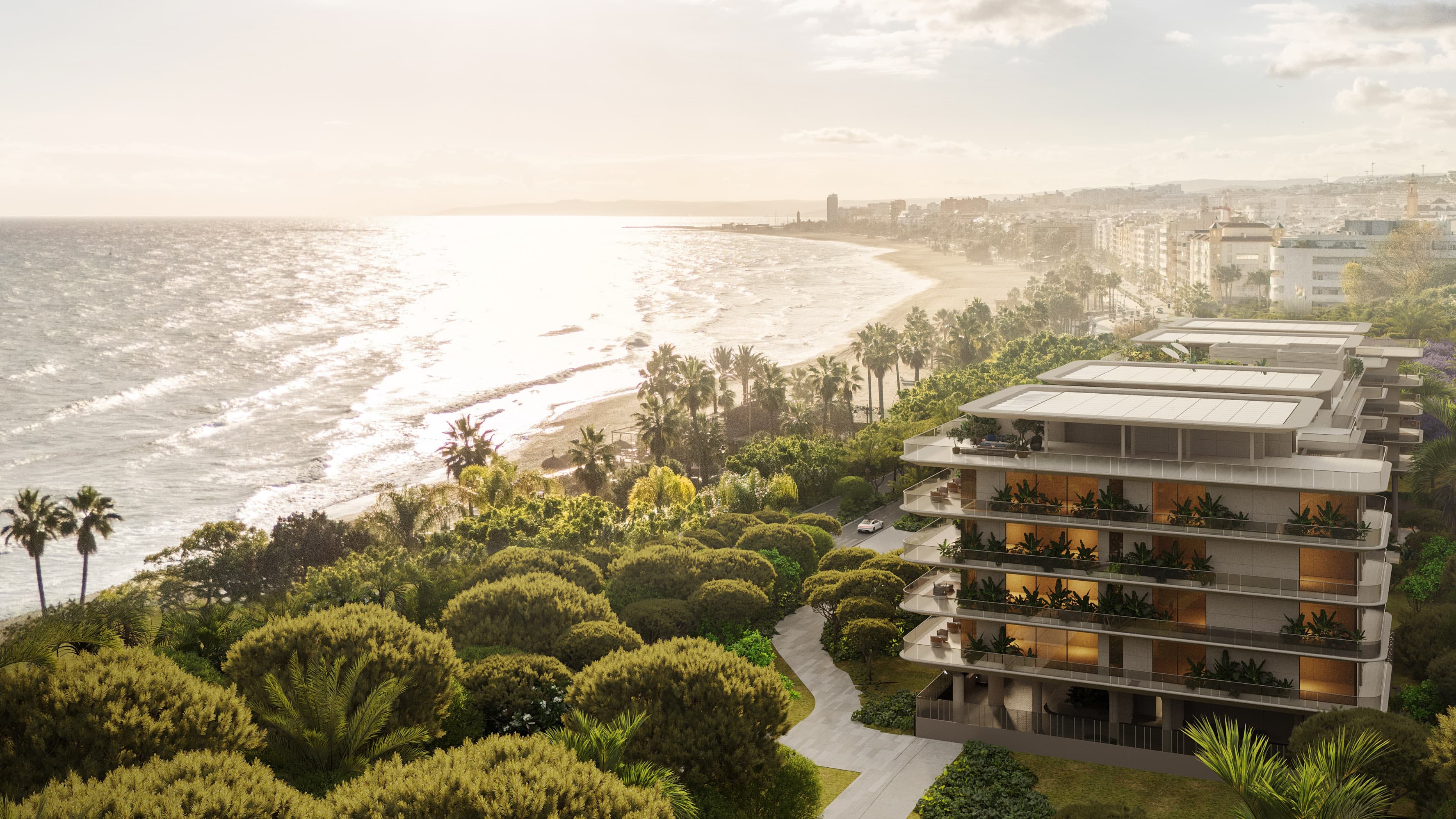
The estate is also the first urban development in Spain to achieve BREEAM certification, and Vista Lago Residences was named World's Best Residential Development at the 2022 International Property Awards, alongside Best Architecture in Europe. Casa El Lago, one of the apartment buildings, was designed by Rafael de La Hoz.
Amenity of this scale is the mechanism by which the resort intends to justify its pricing. Whether it does is the question any investor should be asking.
The Price Evidence
Here the distinction between sources matters enormously, and anyone comparing figures needs to know which they are reading.
Official completed data. For the Benahavís municipality in the first quarter of 2026, official MIVAU valuations averaged 3,314 euros per square metre, up 8.4 per cent year on year. Registry data for the same quarter shows completed resale at around 4,300 euros. Both are correct: the first derives from conservative mortgage valuations, the second from prices actually achieved.
Asking prices. Benahavís as a municipality asks around 5,550 euros per square metre. La Quinta specifically asks closer to 7,300, a substantial premium to its own municipality, reflecting the golf, the position and the hotel.
New build at Real de La Quinta. Pricing here operates in a different bracket again, with agency analysis putting the resort's new build around 10,000 euros per square metre.
The gap between 4,300 and 10,000 is not an anomaly. It is the difference between the municipal resale average — which includes village apartments and older stock across the whole of Benahavís — and brand new, high-specification product inside a gated resort with a lake and a hotel. But it is also the reason a buyer should never benchmark a Real de La Quinta purchase against a Benahavís average. The comparable is other prime new build, not the municipality.
The Off-Plan Mechanics
This is where the investment case is strongest, and it rests on evidence rather than forecast.
Villas at Vista Lago launched at 4.295 million euros and now sell from 6.395 million. That is the developer's own pricing across phases, and it demonstrates the mechanism precisely: release in phases, raise prices between them, and a buyer entering early acquires at a price the developer has already planned to exceed.
Payment is staged over the construction period rather than paid at once, which spreads the capital commitment. And completed units arrive into a market where comparable new stock inside the resort is limited by the masterplan itself.
The serviced plots are the other distinctive route. Real de La Quinta sells plots directly, delivered with building licences accessible, utilities connected and the required retaining walls already executed. For a buyer who wants to design their own house, that removes the two risks that usually make self-build unattractive on this coast — licensing uncertainty and groundworks on steep terrain.
The Angsana Effect
The pattern is well established on this coast and worth stating plainly. When a recognised hospitality brand attaches its name to a residential location, three things follow: values across the surrounding streets reprice upward, professional rental management becomes available to owners, and the address enters an international conversation it was not previously part of.
Four Seasons is doing this east of Marbella. Waldorf Astoria inland. St Regis at Casares. Angsana, by the Banyan Tree Group, is doing it here — and as the group's Spanish debut, it carries a launch profile that a fifth property in an established market would not.
For an investor, the relevant question is timing. The repricing associated with a branded opening tends to occur between announcement and first full season of operation. Purchases made before that window capture it; purchases after it pay for it.
Rental Potential
The resort's letting case is stronger than most inland Costa del Sol locations for three reasons. Golf demand peaks in spring and autumn when beach demand falls, which extends the season. Resort amenities — lake, club, spa, watersports — support premium nightly rates and appeal to families, who book longer stays. And a hotel operating within the estate brings professional management infrastructure that individual owners elsewhere have to arrange themselves.
Gross yields on prime Costa del Sol new build typically run between five and eight per cent, with net figures after fees, management, taxes and maintenance more commonly between three and six. At this price point capital appreciation, rather than income, is the principal return driver, and buyers should model it that way.
What to Verify Before Committing
Three cautions, and they matter more at this price point rather than less.
Treat projections as projections. Some published analysis forecasts values rising towards 18,000 euros per square metre as phases complete, and cites a 250 per cent increase across Benahavís and La Quinta over the past decade. Those figures come from agency sources with an interest in the outcome, and while the phase pricing evidence is real and verifiable, forward projections of that magnitude are not the same thing. Build your own case on what has actually been charged, not on what is forecast.
Completion timelines slip. Never plan financing, a relocation or rental income around a stated completion date. On a resort still years from full build-out, that applies to the amenities as much as the houses — establish contractually what is committed and when.
Community and service charges. A resort with a lake, a club, a spa, a golf course and round-the-clock security carries running costs to match. Obtain the annual estimate in writing during due diligence, and model it into any yield calculation rather than discovering it at completion.
Conclusion
La Quinta offers an investor two distinct propositions on the same hillside. The established urbanisation gives liquidity, comparable evidence and a thirty-five year track record, with entry available from under 400,000 euros. Real de La Quinta gives phase pricing, a development premium and a branded hotel opening, at a price point where the entry is measured in millions.
The strongest evidence for the second is not any forecast but the developer's own price history — a villa phase that opened at 4.295 million and now starts above 6.3 million. Those numbers are verifiable, they have already happened, and they are the reason this hillside deserves the attention it is currently getting.