
The Golden Mile: Marbella's Finest Address
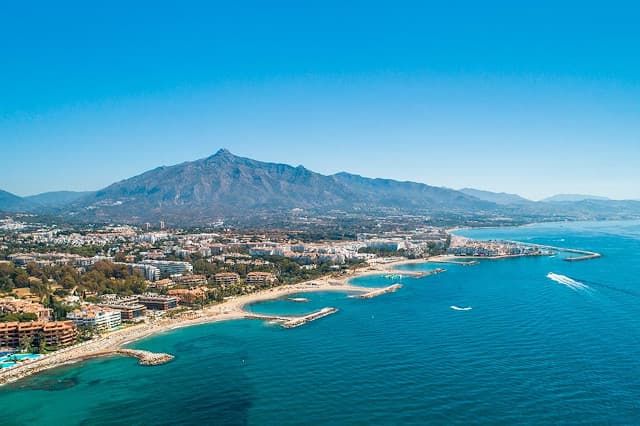
Four and a half kilometres of coast road between the western edge of Marbella town and Puerto Banús, with the Mediterranean on one side and La Concha rising on the other. This is where Marbella's reputation was made, and where it still lives.
The name has stretched over the decades. It began as a description of the properties immediately either side of the old N-340 — the hotels, the Saudi royal residence, the mosque — and now takes in the hillside urbanisations above as well, running up to the Nagüeles woodland at the foot of the Sierra Blanca range. What it means in practice is Marbella's most prestigious postcode, and by a comfortable margin its most expensive.
How It Began
In 1954, Prince Alfonso von Hohenlohe opened the Marbella Club on the Santa Margarita estate, and effectively invented modern Marbella. The hotel drew a generation of film stars and European aristocracy through the fifties and sixties, and Puente Romano followed close behind. Before long the visitors stopped visiting and started building — villas directly on the shore, or in the hills immediately behind.
The names that settled here established the tone: Rothschilds, Bismarcks, Thurn und Taxis, Goldsmiths, Thyssen-Bornemisza. King Fahd of Saudi Arabia built a summer residence on a twenty-hectare estate that deliberately echoed the White House in scale and style, and the King Abdul Aziz Mosque was later commissioned in his honour a short distance along the road. By the time the area acquired the name La Milla de Oro, the reputation was already fixed.
That history matters commercially. Seventy years of continuous prestige is not something a new development can manufacture, and it is the reason values here have held through every cycle the Spanish market has produced.
The Beachside
The southern side of the road is the heart of it. Between Marbella town and Puerto Banús sit the addresses that international buyers ask for by name: Casablanca, Santa Margarita, Las Torres, Santa Petronila, Los Verdiales, Río Verde and the Oasis complexes closer to Banús.
Frontline beach villas here are among the rarest assets in Spain. Plots on the beachside tend to be more compact than on the hill — commonly five hundred to eight hundred square metres — but position is everything, and the stretch between Casablanca and Puente Romano rarely produces a sale. Beachfront apartment complexes are equally limited, because very few were ever built: Alhambra del Mar with its water gardens, Marina Mariola, Las Cañas Beach, Playa Esmeralda, Port Oasis and the apartments within Puente Romano itself. The Puente Romano gardens — Jardín Japonés, Jardín Andaluz, Jardín Persa — move quickly whenever anything appears.
Buildable land on the beachside is effectively exhausted. Buyers who want to build new here generally acquire an older property with the intention of demolishing it, which is now a standard route rather than an unusual one.
The Hillside
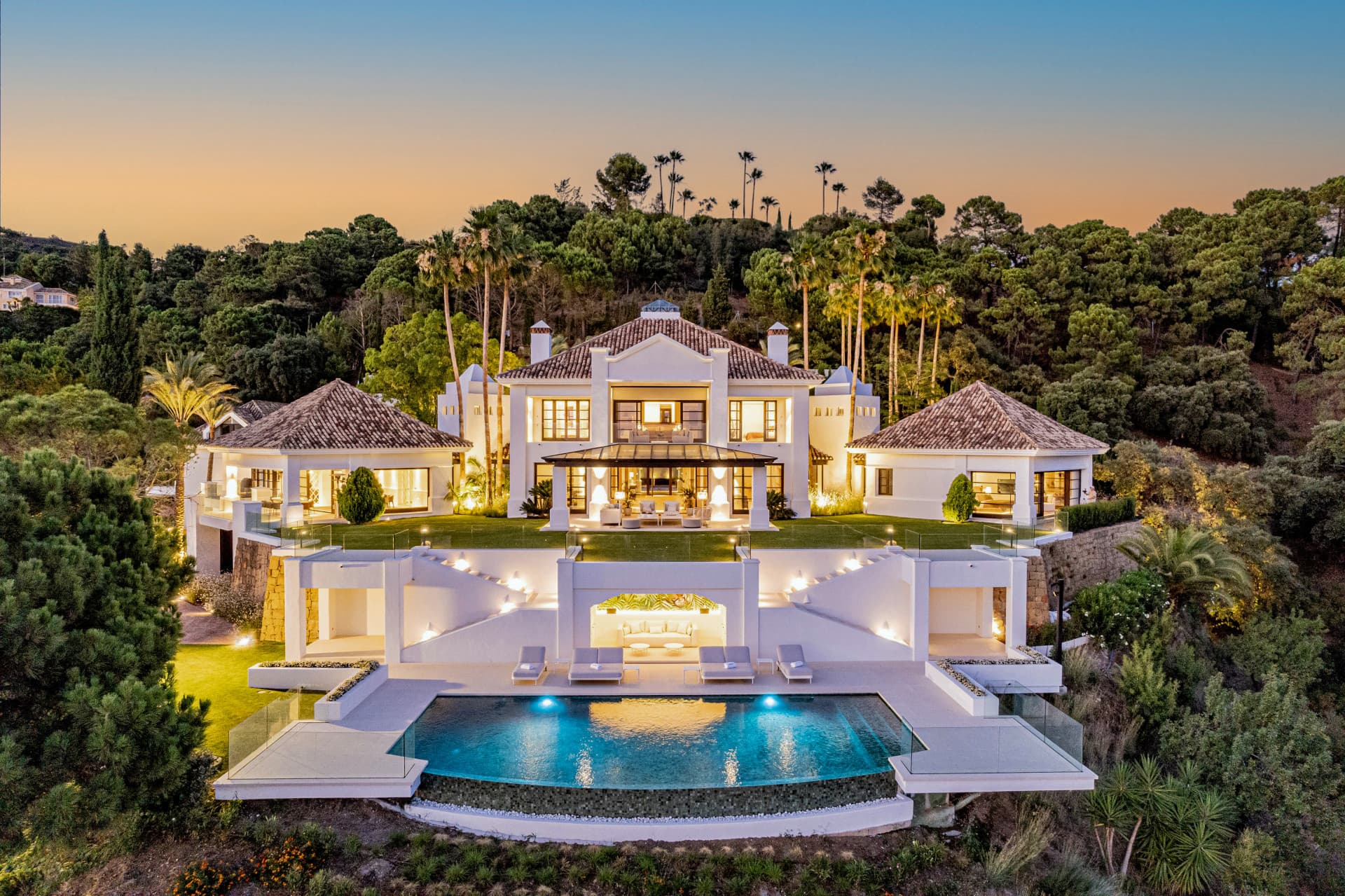
North of the road, the ground climbs and the character changes. Nagüeles and Rocío de Nagüeles offer the classical Golden Mile villa: mature gardens, established streets, sea views over the town. La Carolina, El Vicario, Las Lomas del Marbella Club and Marbella Hill Club sit among them, along with the distinctive village-style enclave of La Virginia.
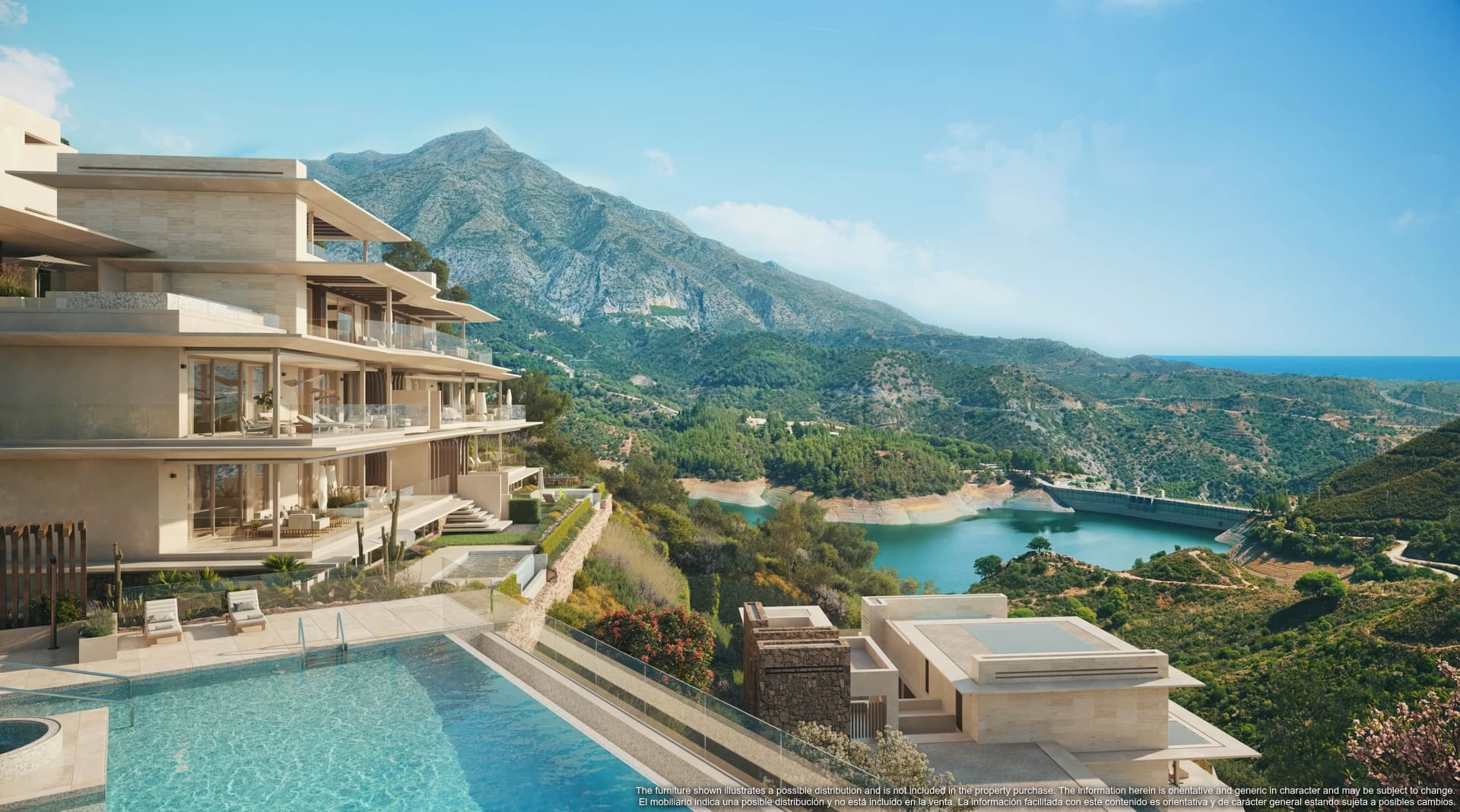
Higher again, beyond the motorway, are the gated estates that have come to share the Golden Mile designation — Sierra Blanca, Cascada de Camoján, Altos Reales and La Quinta de Sierra Blanca. These are substantial enough to warrant their own treatment, and we cover Sierra Blanca separately, but it is worth understanding that when an agent says Golden Mile they may mean the beachfront or they may mean three hundred metres up a mountain. The two are very different purchases at very different prices.
Between the two sit a long list of apartment and townhouse communities — Coto Real, Ancón Sierra, Señorío de Marbella, La Trinidad, Monte Paraíso, Imara, Reserva de Sierra Blanca among many others — which is where most buyers who want this address at a realistic budget actually end up.
Living Here
The Golden Mile functions as a resort and a neighbourhood at once. Marbella Club and Puente Romano anchor it, with Nobu set within the Puente Romano resort and the Don Pepe, Coral Beach and Alanda nearby. The restaurant concentration is the strongest on the coast: Nobu itself, Dani García's group including Leña and Lobito de Mar, Villa Tiberio in its Italian gardens, and the beach clubs — Trocadero, Victor's Beach, Besaya, the Marbella Club's own.
The tennis club at Puente Romano opened in 1979 under Björn Borg's management and remains a genuine institution. The promenade running to Puerto Banús is the daily spine for walking and cycling. And for families, the schools are unusually close: Swans, the British International School of Marbella in Nagüeles, Aloha College a short drive into Nueva Andalucía, with Les Roches nearby for those going further.
Everything else falls inside a ten-minute radius — shops, supermarkets, clinics, golf. Marbella centre is ten minutes from the western end; Málaga airport is thirty-five to forty-five minutes depending on the road and the hour.
What It Costs
The Golden Mile is the most expensive address in Marbella, and the figures reflect it. Current data puts the area at roughly 7,000 euros per square metre overall, with the Nagüeles and Milla de Oro band nearer 8,300 — against a Marbella average closer to 5,940. Frontline beachside apartments in the established complexes regularly trade well above 15,000 euros per square metre, and villas in the hillside enclaves command a substantial premium over the area average.
The spread is the thing to understand. A three-bedroom apartment in an older complex above the motorway and a frontline villa in Las Torres are both accurately described as Golden Mile, and they can differ by a factor of ten. Position relative to the beach, and position relative to the road, account for most of that. Buyers should be precise about which part of the Golden Mile a property actually occupies before comparing it to anything else.
Scarcity underpins all of it. Very little can still be built here, the best complexes rarely produce a listing, and a meaningful share of transactions never reach the portals at all.
Conclusion
The Golden Mile is the closest thing the Spanish coast has to a blue-chip address. Seventy years of history, two hotels that defined Mediterranean luxury, a beachfront that cannot be extended and a hillside that cannot be widened. For buyers who want the certainty that comes with an address everybody already knows, nowhere else in Marbella offers the same combination of prestige, scarcity and proven resilience.