
Finca Cortesín: The Estate That Hosted the Solheim Cup
Two kilometres inland from the coast between Estepona and Sotogrande, a private road turns off towards the hills and arrives at a gatehouse. Beyond it lies two hundred and fifteen hectares of Andalusian countryside, roughly a hundred and fifty of them protected green belt that can never be built on, and within that a championship golf course, a five-star hotel, a beach club and a small number of private residences.
Finca Cortesín is not a resort with houses attached, nor an urbanisation with a hotel in it. It is a single estate, planned as a whole, and it is among the very few places on this coast where an owner can genuinely live inside a five-star operation.
Where It Is
The estate sits in the municipality of Casares, in Málaga province, reached from the AP-7 at exit 153 and then briefly inland on the road towards Casares village. The entrance has its own roundabout and gatehouse, set back around two kilometres from the main road — which is the first indication that the estate operates on a different scale from its neighbours.
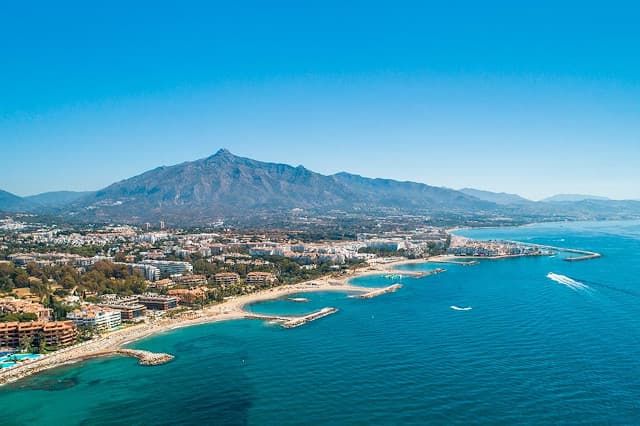
Gibraltar and its airport are around fifteen to twenty-five minutes away, Marbella about thirty, Puerto Banús a little more, and Málaga airport roughly fifty minutes. Sotogrande, with Valderrama and the polo, is a short drive west. It is an unusually well-connected position for somewhere that feels this remote.
The Estate
Finca Cortesín is organised around six principal elements: the hotel, the golf course, the spa and sports club, the residential properties, the beach club at Bahía de Casares, and a small boutique and gallery space within the grounds.
The effect is a self-contained ecosystem. Residents and guests can move between golf, dining, the spa, the beach and the grounds without leaving the estate, and the services that support all of it are hotel services rather than community ones. That distinction matters more than it sounds: the standard of maintenance, security and staffing is set by a luxury hotel operation rather than by a community of owners voting on a budget.
The protected green belt is the other structural fact. Roughly seventy per cent of the estate cannot be developed, which permanently guarantees the space, the outlook and the privacy of everything within it.
The Golf
The course is the estate's international calling card. Designed by Cabell Robinson — who worked under Robert Trent Jones before establishing his own practice, and who also designed La Reserva at Sotogrande — it opened in the mid-2000s and is one of the longest and most demanding layouts in Europe, with more than a hundred bunkers and generous, undulating greens.
Its tournament record is exceptional for a course of its age. It hosted the Volvo World Match Play Championship three times, and in 2023 staged the Solheim Cup, bringing the best women golfers in the world to the Costa del Sol and drawing a global television audience to this stretch of coast. A Jack Nicklaus Academy operates on site, including junior coaching.
What distinguishes it from most Costa del Sol courses is the absence of housing along the fairways. The course was laid out through open country rather than between rows of villas, and the difference in the playing experience is immediately obvious.
The Hotel and the Spa
The hotel holds sixty-seven suites, arranged from junior suites with private gardens or balconies through executive and pool suites to the Cortesín Suite at a hundred and eighty square metres. The architecture is Andalusian in the grand sense — whitewashed walls, high ceilings, courtyards, bougainvillea — executed with restraint rather than theatricality.
Dining is a genuine strength. Don Giovanni serves Italian, Kabuki Raw brings Michelin-starred Japanese cooking to the estate, and El Jardín de Lutz handles Spanish classics, with several further outlets across the grounds and a poolside bar.
The spa is among the largest on this coast and includes a snow cave alongside the more conventional thermal circuit, with a sports club, fitness facilities and tennis completing the offer. For residents, access to all of it is part of ownership.
The Beach Club
Finca Cortesín's beach club sits at Bahía de Casares, about a kilometre and a half from the hotel, across six thousand square metres directly on the sand. There are gardens, Balinese beds, loungers and a thirty-five metre infinity pool, with a restaurant specialising in seafood and rice dishes.
A shuttle connects it to the estate, which solves the one structural weakness of an inland position. Owners get the privacy and cooler air of the hills with beach access on demand — an arrangement that works considerably better than owning on the beach and driving inland for everything else.
The Residences
The residential component is deliberately small, and it comes in two principal forms.
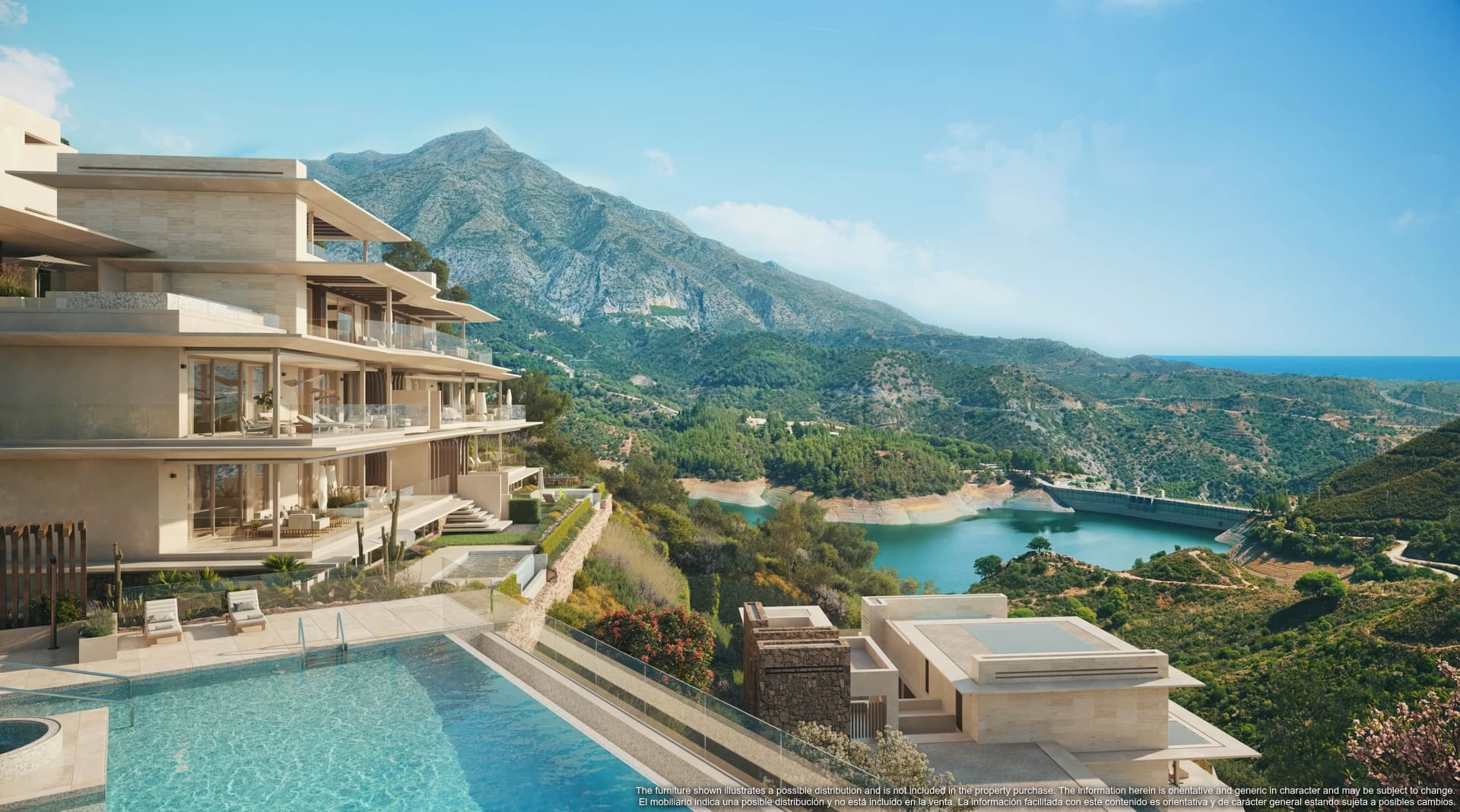
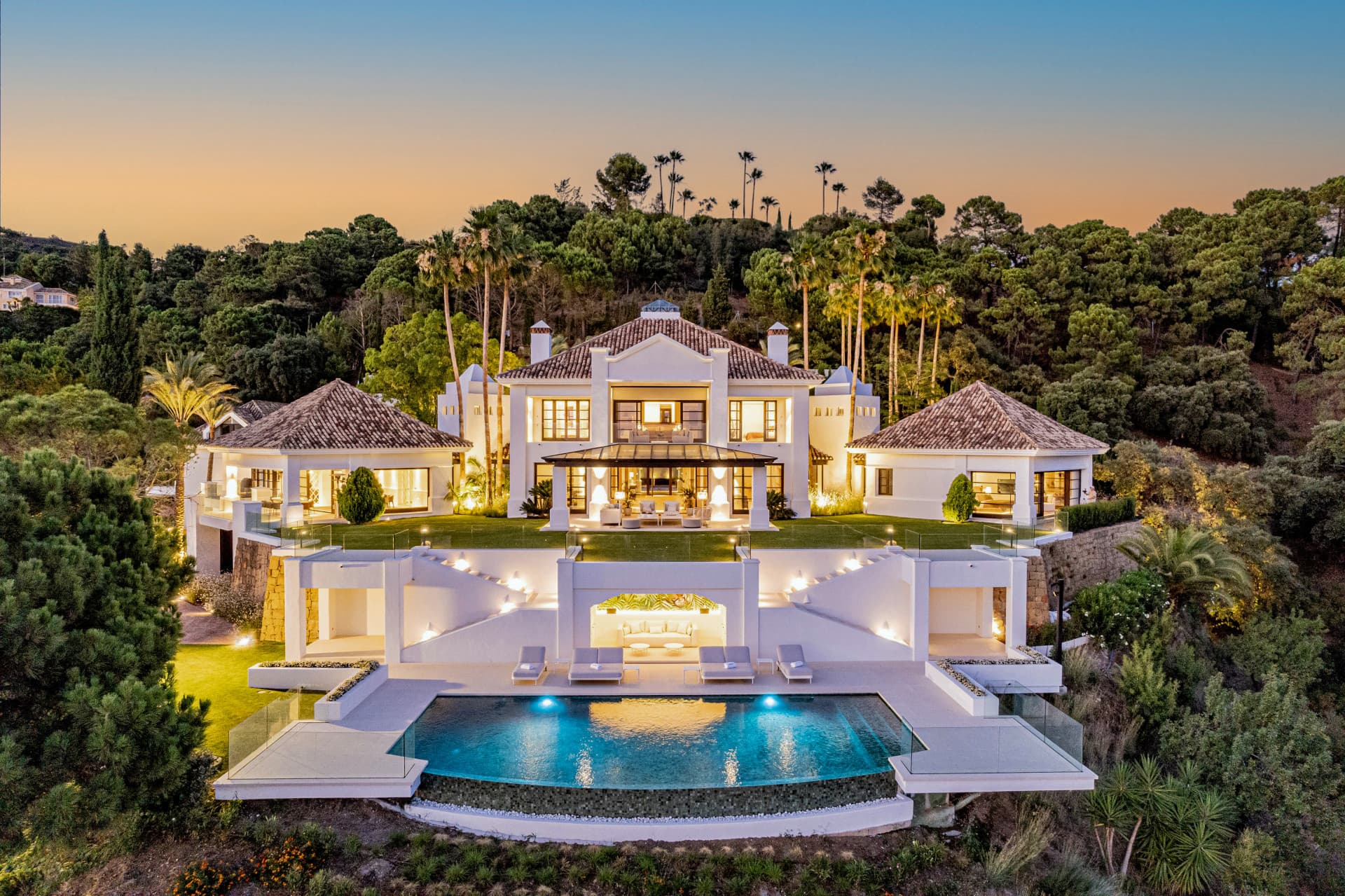
La Reserva offers two and four-bedroom private homes distributed across the estate, each with its own garden and pool, designed for family living at a manageable scale rather than for display.
Green 10 comprises larger five and six-bedroom houses positioned directly on the golf course between the ninth and tenth holes, with open views across to the Sierra Bermeja on one side and the Mediterranean on the other.
Both categories include access to the full hotel amenity infrastructure as part of ownership, which is the essential point. A house here comes with a five-star hotel's concierge, restaurants, spa, security, maintenance and beach club attached — a proposition available in very few places in Spain, and one that also makes the properties unusually straightforward to let when not in use.
Why It Holds Its Value
Three things underpin the case. Scarcity is absolute: the residential element is a small fraction of a large estate, most of which is protected, so supply here cannot grow. Brand and tournament recognition give the address genuine international standing — the Solheim Cup alone put it in front of an audience that most developments spend decades trying to reach. And hotel-operated service means the estate will not deteriorate in the way that owner-managed communities occasionally do.
It sits within a wider western corridor that has been performing strongly. Casares, Manilva and the stretch towards Sotogrande have delivered some of the sharpest capital growth on the coast in recent years, helped by prices that remain below Marbella's while the quality gap narrows. Spain's first standalone St Regis residences are being built nearby, which tells you how the institutional market reads this area.
What to Know Before Buying
The location is inland and it is west. Everything is a drive: Marbella is thirty minutes, international schools twenty-five to thirty-five, Málaga airport around fifty. For a family doing a daily school run that is a real consideration, and anyone weighing it should make the journey at the hours they would actually travel.
The estate is also quieter than a Marbella address by design. There is no nightlife within reach and no walkable town centre — Casares village is beautiful and small, Estepona is fifteen minutes. Buyers who want to walk to dinner should be honest with themselves about that.
And running costs reflect what is provided. Hotel-standard services, security and maintenance are not inexpensive, and the annual figures should be established in writing during due diligence rather than estimated afterwards.
Conclusion
Finca Cortesín is the clearest example on the Costa del Sol of an estate built as a single idea rather than assembled over time. A championship course with no houses on it, a hotel that runs the whole operation, a beach club a kilometre away, and a small number of houses inside all of it — with seventy per cent of the land guaranteed to stay as it is.
For buyers who want the service of a great hotel with the privacy of their own house, and who are content to be thirty minutes from Marbella rather than in it, there is very little on this coast that competes.