
El Madroñal: The Costa del Sol's Best-Kept Secret
Ten minutes up the Ronda road from the coast, the landscape closes in. Cork oaks and pines press against the tarmac, the valleys fall away on either side, and a gate appears that most people driving to Ronda never notice. Behind it, four hundred metres above the Mediterranean, sit around a hundred and fifty villas on some of the largest private plots in southern Spain.
El Madroñal has been called Marbella's hideaway and the best-kept secret on the coast, and both descriptions are earned. It sits directly opposite La Zagaleta and shares much of its character, but it has never sought the same attention — which, for the people who live there, has always been rather the point.
Where It Is
El Madroñal occupies a south-facing hillside in the municipality of Benahavís, along the A-397 Ronda road at the foot of the Sierra de las Nieves and sheltered behind the Serranía de Ronda. La Zagaleta lies opposite, with the village-style community of La Heredia adjacent.
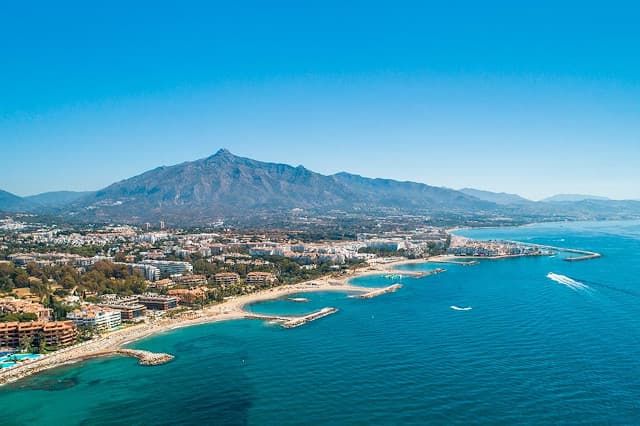
Access is straightforward despite the seclusion. The coast road and the AP-7 are under ten minutes down the hill, San Pedro and Puerto Banús around fifteen, Marbella about twenty, and Málaga airport just over half an hour. Gibraltar and its airport are roughly an hour away, which matters to a certain kind of buyer more than people expect.
The History
The land was originally a private hunting estate, owned and developed by the Parladé family, long-established figures in Marbella's early social history. It later passed to Thierry Roussel, whose marriage into the Onassis family made the estate, in effect, a natural extension of Puerto Banús in the hills.
The wider holding of which it formed part was eventually divided into the three great hillside estates that define this part of Benahavís today: El Madroñal, La Zagaleta and La Reserva de Alcuzcuz. Development of El Madroñal as a residential community followed, and it has proceeded slowly and conservatively ever since — which is why, four decades on, the woodland still dominates the architecture rather than the reverse.
The name comes from the madroño, the strawberry tree, which grows in abundance across these slopes alongside the cork oaks, pines and olives.
The Setting
The altitude is the first thing residents mention. At four hundred metres, El Madroñal is noticeably cooler than the coast in July and August — several degrees, and more in the evenings — which transforms the summer here. It also means a winter that requires a properly heated and insulated house, a point worth checking on any property built before the current standards.
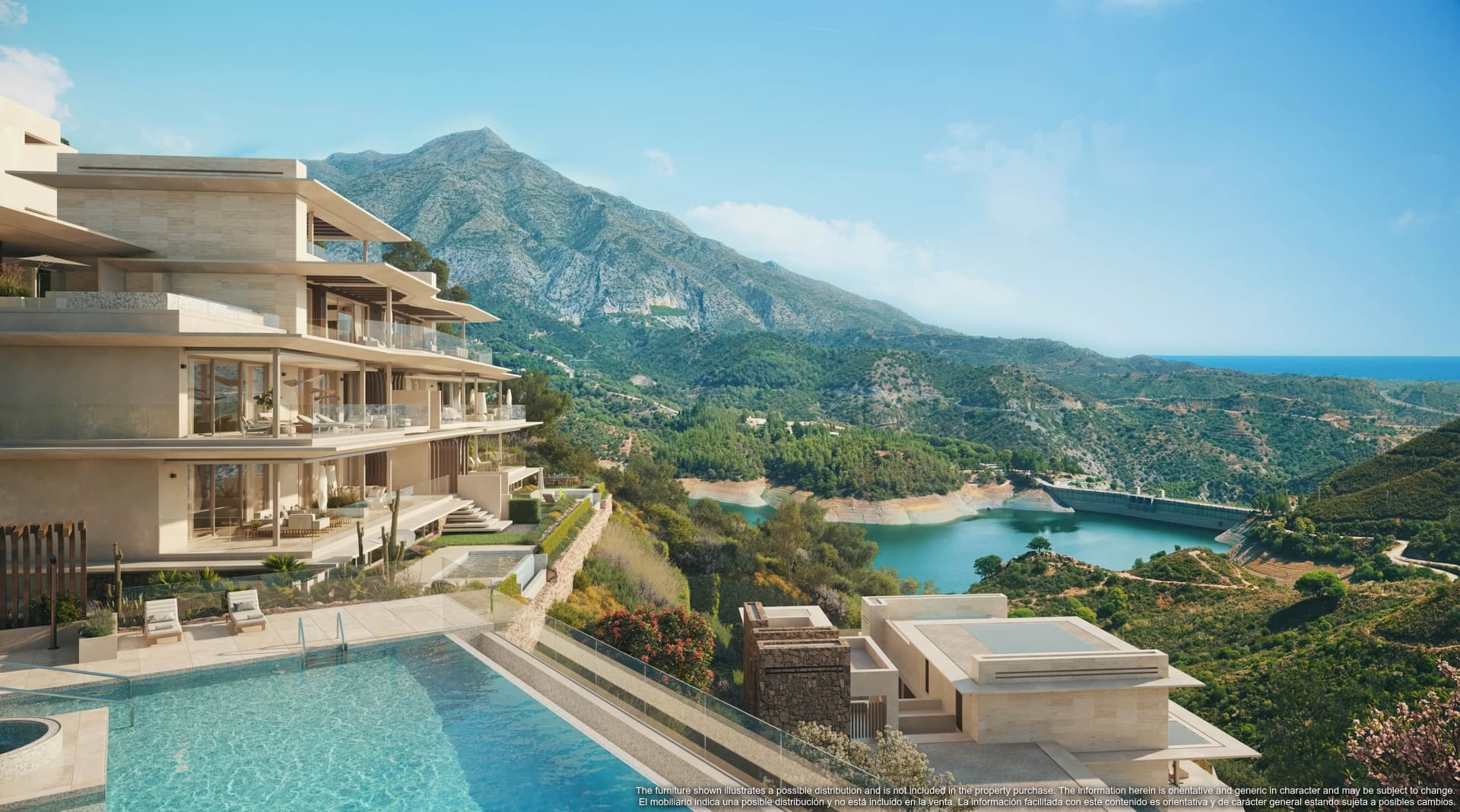
The views are the second. From the higher plots the outlook runs across the La Quinta valley and its golf, down the coastline, and out to the Strait of Gibraltar, with the mountains of North Africa visible on a clear day. South-facing orientation across most of the estate gives long evening light and keeps terraces usable well into the year.
And the third is simply the quiet. Narrow lanes wind up through Mediterranean vegetation, houses sit well apart on their own ground, and there is no through traffic because the estate leads nowhere except to itself.
Security and Privacy
El Madroñal is accessed through six separate gated entrances from the Ronda road, each camera-monitored, with security guards patrolling the estate around the clock. The multiple entrances are a practical advantage rather than a weakness: depending on where a property sits, residents use whichever gate is closest, which keeps journeys short across what is a large area.
The combination of gated access, low density and heavy woodland produces a level of genuine privacy that very little on this coast can match at any price.
The Villas
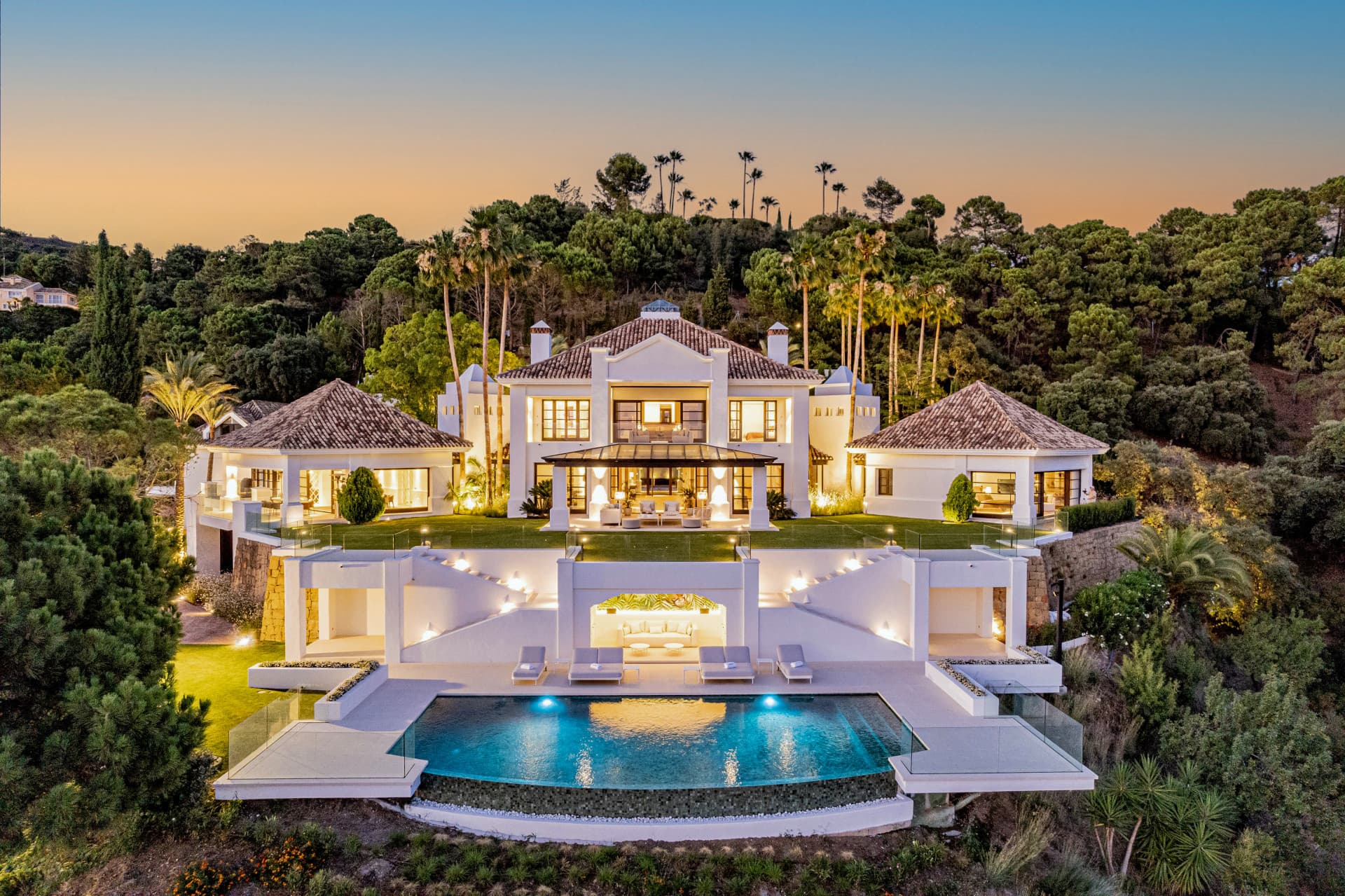
The original character here was classically Andalusian — grand cortijo-style houses with tiled roofs, arched terraces, hand-finished materials and mature gardens established over decades. A good number remain, and the best of them are among the finest traditional houses in the province.
Alongside them, El Madroñal has been quietly modernising. Contemporary architect-designed villas now appear throughout the estate, many the result of buyers acquiring an older property and rebuilding it entirely, and the results range from clean-lined glass and stone houses to eco-focused designs that make serious use of the orientation. The variety is one of the estate's appeals: it does not feel like a single-vintage development.
Plots are substantial, commonly from around two thousand square metres up to four or five thousand and beyond, with built areas frequently in the range of five hundred to nine hundred square metres. Many properties retain significant unused building allowance, which is a meaningful consideration for anyone planning to extend.
Plots, and Why That Matters
Unusually for a prime address on this coast, El Madroñal still has land. Where Sierra Blanca is built out and La Zagaleta's virgin plots have all but disappeared, plots here continue to come to market — smaller ones from around 460,000 euros, with the largest approaching three million, and an average in the region of 210 euros per square metre.
For buyers who want to design their own house at this level, that is a genuinely rare opportunity, and it is the single strongest argument for looking here rather than at the obvious alternatives. Two cautions. The terrain is steep in places, so topography affects both buildability and cost considerably. And proximity to one of the six entrances has a real bearing on value, so location within the estate deserves as much attention as the plot itself.
El Madroñal or La Zagaleta
The two are frequently mentioned together and are not the same proposition.
La Zagaleta is larger, more formal and more serviced — private golf courses, a heliport, an equestrian centre, a clubhouse — with prices and service charges to match. El Madroñal offers a comparable degree of privacy, woodland and altitude with fewer communal facilities, a lower cost of ownership, and prices that start considerably lower.
The practical difference for buyers is liquidity. El Madroñal's broader price range and more comparable stock make resale more straightforward than in the ultra-prime bracket above it, while the setting remains of the same order. For many buyers that combination is more attractive than the badge.
What It Costs
Villas in El Madroñal broadly run from just under two million euros for a house on a plot of around two thousand square metres, up to around eight million for the best properties, with the most exceptional estates reaching higher. Between those, a modern four-bedroom villa on a two-thousand-square-metre plot sits in the region of four million, and a new six-bedroom house of around eight hundred and sixty square metres built on a plot of twenty-six hundred has traded near six million.
Asking prices across the El Madroñal and La Zagaleta pocket average close to 8,900 euros per square metre — the highest in Benahavís, itself the most expensive municipality in Spain. Values vary widely within the estate according to views, topography, architectural quality and gate proximity, so averages here are orientation rather than valuation.
Who It Suits
Families do particularly well here, and the reasons are practical: space, security, quiet, and international schooling within reach — Laude San Pedro International College is ten to fifteen minutes away, with bilingual Spanish options closer still.
It suits buyers who want a country estate rather than a coastal property, who value privacy over visibility, and who will happily drive fifteen minutes for dinner in exchange for waking up in a forest. It suits people planning to build, given the plot availability. And it suits those who want La Zagaleta's setting without La Zagaleta's overheads.
It suits beach-first buyers less well. Everything requires a car, the road up is winding, and the nearest sand is fifteen minutes away. Large plots in woodland settings also carry real maintenance commitments — gardeners, pools, systems — which should be budgeted as a permanent annual cost rather than an afterthought.
Conclusion
El Madroñal has spent four decades doing very little to attract attention, and it has worked. Around a hundred and fifty houses, six quiet gates, a hillside of cork oak and madroño, and a view that reaches another continent.
For buyers who want the privacy and elevation of Benahavís's great estates, with land still available to build on and a price range that begins well below its famous neighbour, it remains the most compelling address on this coast that most people have never heard of.