
East Marbella: Where Marbella Actually Lives
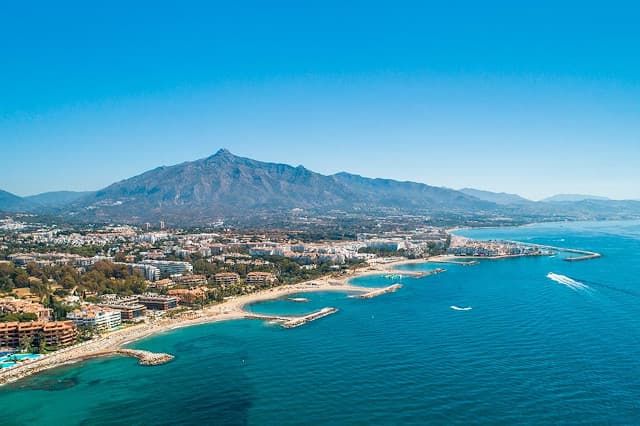
East Marbella runs from the edge of town out to Cabopino, fifteen kilometres of pine woodland, wide beaches and low-density housing. It is the part of Marbella that people who live here tend to choose.
The Golden Mile and Puerto Banús define Marbella in the international imagination, and for good reason. But the eastern side of town operates differently: greener, quieter, more residential, and with beaches that are genuinely better rather than merely closer to something. It has spent years being the local secret. That is changing quickly.
Where It Is and Why It Feels Different
The area stretches east from Marbella's town centre to the boundary with Mijas Costa, taking in Río Real, Los Monteros, Costabella, Las Chapas, Elviria, Marbesa and Cabopino. Everything within it sits inside fifteen minutes of the old town, and it is meaningfully closer to Málaga airport than anywhere west of Marbella — a detail that matters more than buyers expect once they are flying in and out regularly.
The character comes from the landscape. Umbrella pines run down almost to the sand, the coastline opens into wide sandy bays rather than the narrow pebbled strips further west, and the protected dunes at Artola, beside Cabopino, are a natural monument rather than a building plot. Density is low, plots are larger, and the general feeling is of a place where people live year-round rather than arrive for August.
The Neighbourhoods
Río Real and Los Monteros sit closest to town and carry the highest prices in the area. Both are established, beachside, and built around golf and five-star hotels, with the kind of mature landscaping that only decades produce. Los Monteros in particular contains some of the most significant beachfront estates anywhere in Marbella.
Elviria and Las Chapas form the middle of the area and the bulk of its housing. This is family territory: villas on generous plots, international schools nearby, several golf courses, and a beach strip with restaurants and beach clubs that stay busy through the season. Hacienda Las Chapas and El Rosario are the quieter, greener corners.
Marbesa and Cabopino occupy the eastern end. Marbesa is a genuinely low-key beachside villa area with a settled residential feel, and Cabopino has a small marina, the dunes, and a working rhythm that owes more to a Spanish coastal town than to Marbella. Prices here are the most accessible in the area, though that gap has narrowed sharply.
What It Costs, and Where It Is Heading
In 2026, asking prices in the Río Real and Los Monteros corridor average around 6,150 euros per square metre, with Las Chapas and El Rosario close behind at roughly 6,000 euros. Elviria and Cabopino sit lower at approximately 5,250 euros. For comparison, Marbella as a whole averages near 5,940 euros and the Golden Mile around 8,300 euros — so East Marbella spans from below the town average to well above it, depending on the street.
Growth has been the story here. Asking prices in the twelve months to January 2026 rose by roughly fifteen per cent in Elviria and close to seventeen per cent around Cabopino and Artola, with some pockets higher still, all comfortably ahead of the wider Costa del Sol. The driver is institutional: a Four Seasons at Río Real, a Waldorf Astoria resort inland, a new beachfront development at Las Dunas in Elviria, and substantial refurbishment at the Los Monteros and Don Carlos hotels. Branded investment at that scale changes how international buyers read an area. Buyers should note these are asking prices rather than completed sales, and that double-digit growth rarely continues indefinitely.
Who It Suits
East Marbella suits families above all: space, schools, safe beaches, and neighbourhoods that function in February. It suits people who want to be near Marbella rather than in it, and those who fly frequently and value the shorter airport run. It suits anyone who would rather walk through pines to a wide beach than queue for Puerto Banús.
It suits others less well. Nightlife is limited, and anyone wanting Marbella's social intensity will spend a lot of time driving west. Much of the housing stock is 1980s and 1990s, so refurbishment costs deserve careful modelling. And the coast road through the area becomes genuinely congested in summer, which is the single complaint you hear most from residents.
Conclusion
East Marbella offers the best beaches in the municipality, the most greenery, and a year-round community, at prices that until recently sat below the Marbella average. The institutional money arriving suggests the discount is closing. For buyers who want Marbella as a place to live rather than a place to be seen, it remains the most convincing part of the town.